Redness Reduction & Soothing
Objectively quantify the anti-redness effect of your treatment through AI chromatic analysis, skin comfort measurement, and monitoring of skin reactivity.
The Client Problem
A dermocosmetic brand specializing in sensitive skin is developing a soothing anti-redness cream and must prove its effectiveness on diffuse redness and mild rosacea.
Redness is a common skin concern but difficult to assess objectively. Self-assessments are heavily biased by emotional state and lighting. The brand needs objective instrumental measurements to position itself against the segment leaders.
The identified challenges
- Objectively measure redness reduction (chromatic analysis)
- Assess the soothing effect and the reduction of skin reactivity
- Quantify perceived comfort and quality of life
- Demonstrate effectiveness under skin stress conditions (cold, UV)
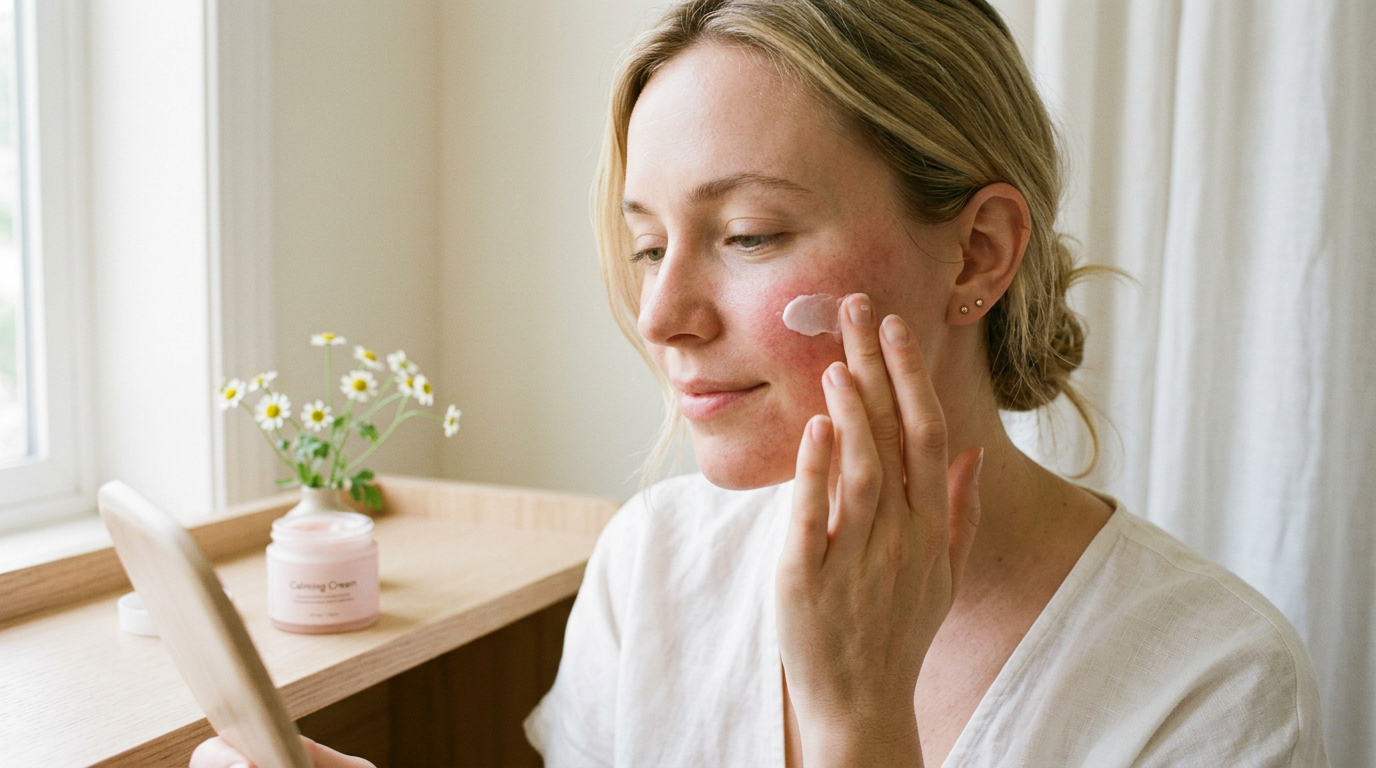
Multi-criteria anti-redness evaluation
Sensitive & Reactive Skin Panel
Women aged 25-60 presenting diffuse redness or diagnosed mild rosacea.
Protocol with Skin Challenge
Measurement at baseline + after provocation (cold, capsaicin) to assess the protective effect.
Chromatic baseline
Standardized photos, AI mapping of the skin's a* (red axis)
Daily use (42 days)
Twice-daily application, weekly photos, comfort journal
Cold challenge
Controlled exposure to cold (5°C, 10 min): measurement of reactivity before/after treatment
Assessment & emotional experience
Final mapping of redness, comfort score, avatar interview on quality of life
Chromatic and sensory analysis
AI Chromatic Analysis
Pixel-by-pixel mapping of the a* axis (red-green) in Lab color space to objectively quantify redness.
Reactivity Test
Measurement of the vascular response after challenge (cold, capsaicin).
Comfort & Sensations
Comfort scales: tightness, tingling, warmth, dryness.
Quality of Life
Impact of redness on daily life via conversational avatar.
Conversational Avatar
AI-guided interview to collect declared perceptions.
A soothed skin, redness under control
a* Index (redness)
-61%61% reduction in the average a* index on affected areas at D42 (p<0.001).
Cold reactivity
-54%After treatment, vascular response to the cold challenge is reduced by 54%. Recovery time halved.
Skin comfort
+67%Tightness disappeared in 89% of participants. Average comfort score: 9.1/10.
Social discomfort
-72%72% reduction in the social discomfort score related to redness (adapted DLQI scale).
Results by climate
Sweden (cold)
France (temperate)
Canada (continental)
Scientifically proven anti-redness claims
"Reduces redness by 61% in 6 weeks"
AI chromatic analysis, 200 participants, 4 countries (p<0.001)
"Protects the skin against the effects of cold"
-54% vascular reactivity to the cold challenge, controlled test
"Immediate comfort, 89% without tightness"
Tightness disappeared as early as day 7, comfort score 9.1/10
"Effective in all climates"
Significant results in cold, temperate, and continental climates
Used products
Are you developing an anti-redness skincare product?
Let’s prove its effectiveness together with objective chromatic measurements and resistance tests.